 Call or Shop In Store For Lower Prices (

Flooring Tips
Herringbone vs. Chevron Flooring: Which Pattern Is Right for Your Home?
Aug
Both are timeless, both are having a major design moment, and at a glance they look almost identical—so it’s no surprise that the herringbone vs. chevron flooring pattern question trips up so many homeowners. The distinction is simple once you know what to look for, but the pattern you choose sets the entire tone of a room. This guide breaks down the difference, the feel each one creates, and how to pick the right fit for your space.
Key Takeaways
- Herringbone uses rectangular pieces laid at 90-degree angles in a broken, staggered zigzag.
- Chevron uses pieces cut at an angle (usually 45 degrees) that meet in a continuous, seamless point.
- The easiest way to tell them apart: herringbone forms a broken zigzag; chevron forms a perfect, unbroken V.
- Both patterns work in tile and wood, and both add visual interest, movement, and a sense of craftsmanship.
- Chevron typically costs more to install because the angled cuts require more labour and produce more waste.
The core difference between herringbone and chevron
The confusion is understandable—both create a repeating zigzag—but the construction is different.
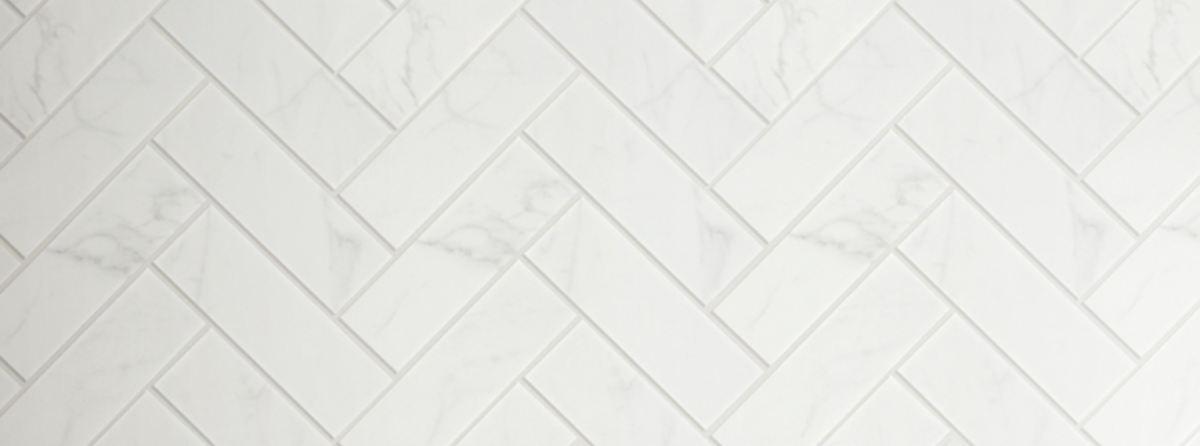
Herringbone is made from standard rectangular planks or tiles laid at a 90-degree angle to one another. The end of one piece meets the side of the next, creating a staggered, broken zigzag. Look closely and you’ll see the pattern “steps.”
Chevron uses pieces cut at an angle (most commonly 45 degrees) at their ends. When laid, these angled ends meet point-to-point, forming continuous, unbroken V shapes that run in clean vertical lines.
A quick test: if the zigzag looks like it’s made of interlocking bricks that break at the corners, it’s herringbone. If the seams form a smooth, uninterrupted arrow pointing down the room, it’s chevron.
The look and feel each pattern creates
Choosing between a herringbone vs. chevron flooring pattern is really a question of the mood you want.
Herringbone carries a classic, heritage feel. It’s been used in European homes and grand buildings for centuries, and it brings a sense of texture, tradition, and understated luxury. Because the pattern is busier and more broken, it adds a cozy, tactile richness that suits both traditional and transitional interiors.
Chevron reads as more contemporary and streamlined. Its clean, continuous lines feel modern, deliberate, and elegant. The unbroken V draws the eye down its length, which can make a room feel longer or guide movement toward a focal point.
Comparing the two patterns
| Factor | Herringbone | Chevron |
|---|---|---|
| Construction | Rectangular pieces at 90° | Angled-cut pieces meeting at a point |
| Visual effect | Broken, staggered zigzag | Continuous, seamless V |
| Overall feel | Classic, textured, traditional | Modern, sleek, streamlined |
| Material waste | Lower (standard cuts) | Higher (angled cuts) |
| Installation cost | More affordable | Typically higher |
| Best materials | Tile, wood, luxury vinyl | Tile, wood, luxury vinyl |
Cost and installation considerations
Neither pattern is a simple “click and go” job—both require precise layout, careful measuring, and an experienced hand to keep the lines true across a room. That said, chevron usually costs more.
The reason is the angled cuts. Chevron pieces must be cut precisely at matching angles, which takes more time and generates more offcut waste than herringbone’s standard rectangular pieces. Herringbone uses uncut (or minimally cut) rectangles, keeping material waste and labour comparatively lower.
For either pattern, professional installation is well worth it. A pattern floor lives or dies on the accuracy of its lines—a small drift early on becomes glaringly obvious across a full room. Skilled installers plan the layout from a centred starting point so the pattern reads cleanly and any cuts fall neatly at the edges.
Which pattern is right for your home?
Start with your interior style. If your home leans traditional, transitional, or you want warmth and timeless character, herringbone is a natural fit. If your style is modern, minimalist, or you want a bold, contemporary statement, chevron delivers.
Then consider the room. Both patterns make stunning feature floors in entryways, kitchens, and living areas, and both work beautifully as a feature wall. In a long, narrow room, chevron’s directional lines can emphasize length, while herringbone’s multidirectional texture can make a large open space feel more grounded.
Material matters too—both patterns are achievable in porcelain and ceramic tile as well as wood and luxury vinyl, so you can get the look you want in a material suited to the room. Browsing Flooring Liquidators’ tile selection is a good way to see which materials suit each pattern, and their feature wall options show how these patterns translate to vertical surfaces.
Finding your perfect pattern
The herringbone vs. chevron flooring pattern decision comes down to the story you want your floor to tell: herringbone for classic, textured warmth, chevron for sleek, modern lines. Both reward careful, professional installation with a floor that becomes a genuine centrepiece. See samples in person to judge scale and finish—visit a Flooring Liquidators showroom, or shop the tile range online with Canada-wide shipping.
Frequently Asked Questions
What’s the simplest way to tell herringbone from chevron? Herringbone forms a broken, staggered zigzag; chevron forms a continuous, unbroken V with seams that meet at a point.
Which pattern is more expensive? Chevron typically costs more because its angled cuts require more labour and create more material waste.
Is herringbone or chevron more modern? Chevron reads as more contemporary thanks to its clean, continuous lines. Herringbone has a more classic, traditional feel.
Can I get these patterns in tile? Yes. Both herringbone and chevron work in porcelain and ceramic tile, as well as wood and luxury vinyl.
Do these patterns need professional installation? It’s strongly recommended. Both patterns depend on precise, consistent lines, which are difficult to achieve without experience.