 Call or Shop In Store For Lower Prices (

Uncategorized
Engineered Hardwood Flooring Your Complete Fall Guide to Beauty, Durability and Smart Savings
Sep
Engineered hardwood flooring gives you the authentic look of real wood with stability that solid hardwood simply cannot match and this fall, Flooring Liquidators is making it more accessible than ever.
If you have been putting off that main-floor renovation, waiting for the right moment, this is it. Fall is the season when homeowners across Ontario start thinking about indoor upgrades, and engineered hardwood is at the top of the list for good reason. It handles Canadian humidity swings, works in basements and condos, and delivers a premium look without the premium headaches.
In this guide, we will break down everything you need to know: what engineered hardwood actually is, how it compares to solid wood, why fall is the smartest time to buy, and how a specific product the Sahara 7 1/2″ x 3/4″ 2mm AB FL059 delivers exceptional value at $6.99 per square foot during our fall specials event.
What Is Engineered Hardwood Flooring?
Engineered hardwood flooring is real wood flooring made with a genuine hardwood veneer bonded to a multi-layer plywood core.
Unlike solid hardwood, which is milled from a single piece of wood, engineered planks are constructed with a cross-grain layered core. This construction method delivers superior dimensional stability. The planks resist expansion, contraction, warping, and cupping far better than solid wood when humidity and temperature fluctuate.
At Flooring Liquidators, our engineered hardwood collection includes over 199 options across species like oak, maple, hickory, and walnut. Whether you are shopping for a modern condo in Toronto or a family home in the GTA, there is a product that fits your space, style, and budget.
How Engineered Hardwood Is Made
The manufacturing process involves three key layers
- The wear layer (top): A slice of real hardwood, typically 2mm to 4mm thick. This is the surface you see and touch. A thicker wear layer means the floor can be refinished more times over its lifespan.
- The core layer (middle): Multiple plies of plywood or high-density fibreboard stacked in a cross-grain configuration. This is what gives engineered flooring its stability.
- The backing layer (bottom): A balancing layer that prevents the plank from warping.
The layers are bonded together under intense heat and pressure, creating a plank that looks identical to solid hardwood but performs far better in real-world Canadian conditions.
Why Fall Is the Best Time to Buy Engineered Hardwood Flooring
Fall is not just a season for pumpkin spice and cozy sweaters. It is also the strongest season for flooring retailers, and that means one thing for you: better deals.
Here is why fall specials on engineered hardwood make sense for both you and us:
- Post-summer renovation lull: Contractors are less booked, installation timelines are shorter, and retailers are motivated to move inventory before winter.
- Ideal acclimation conditions: Fall temperatures and humidity levels are moderate, which means your flooring acclimates more predictably before installation.
- Indoor project season: As outdoor entertaining winds down, homeowners shift focus to interior upgrades. Fall is when people want their homes ready for holiday hosting.
- Year-end inventory management: Manufacturers and retailers clear out current collections to make room for new lines. That means genuine savings on premium products.
At Flooring Liquidators, our fall specials event is live now. This is when we pass direct-from-manufacturer savings on to you across our engineered hardwood collection, including standout products like the Sahara.
Product Spotlight: Sahara 7 1/2″ x 3/4″ 2mm AB FL059
Price: $6.99 per square foot — available now during our fall specials event.
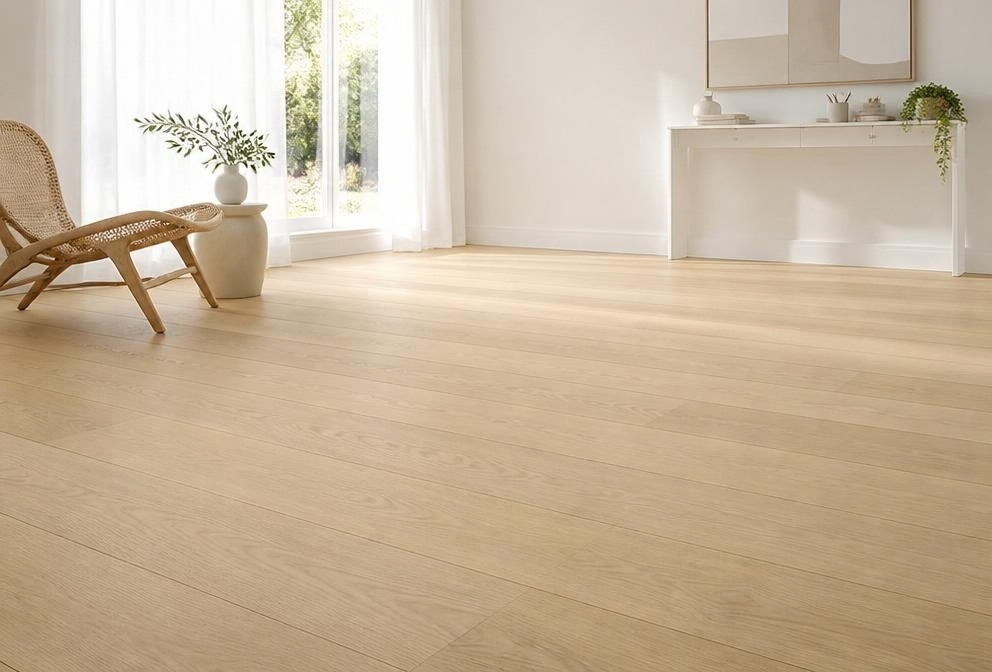
The Sahara is a premium engineered AB-grade flooring that delivers the warmth and character of real European oak with the stability modern Canadian homes demand.
What Makes the Sahara Stand Out
Real European Oak Veneer (2mm Wear Layer)
The 2mm wear layer provides a genuine hardwood surface that can handle heavy foot traffic. It is thick enough to allow for refinishing, giving you long-term value that laminate and vinyl simply cannot match.
AB Grade for a Cleaner, More Uniform Look
AB grade means the veneer has fewer natural imperfections — minimal knots, consistent grain, and a more refined appearance. If you want a floor that looks polished and cohesive across the entire room, AB grade is the right choice.
Generous 7 1/2″ Wide Planks
Wide planks are one of the biggest trends in modern flooring. They create a more open, expansive feel and reduce the number of visible seams. The Sahara’s 7 1/2-inch width delivers that high-end wide-plank aesthetic without the custom price tag.
3/4″ Thickness for a Solid, Substantial Feel
At 3/4 inch thick, the Sahara feels solid underfoot. There is no hollow, clicking sensation that can come with thinner engineered products. This is a floor that feels as good as it looks.
Versatile Installation
The Sahara can be installed using float, glue-down, or nail-down methods. It works on concrete slabs, plywood subfloors, and over radiant heating systems. Whether you are renovating a condo or finishing a basement, this product adapts to your project.
Who Is the Sahara Best For?
- Homeowners who want the look of solid oak without the moisture worries
- Condo owners who need a floor approved for concrete subfloors
- Basement renovations where solid hardwood would fail
- Anyone installing over radiant floor heating
- Designers and contractors who need a reliable, high-traffic-rated product
At $6.99 per square foot, the Sahara delivers premium specifications at a price that is competitive with mid-range engineered products. During our fall specials event, this is one of the strongest value plays in our entire engineered hardwood lineup.
What We’ve Seen in Real Projects: A Real-World Perspective
After years of helping Ontario homeowners choose and install engineered hardwood, a few patterns become impossible to ignore.
The basement myth is real and engineered hardwood solves it.
We have lost count of the customers who walked in convinced they had to choose between laminate and vinyl for their basement. They assumed real wood was off the table. Then we showed them engineered hardwood, explained how the cross-grain core resists moisture, and watched their faces change. Six months later, they come back to tell us how much they love it and how their basement finally feels like part of the home instead of a storage zone.
The “I wish I had gone wider” regret is common.
Homeowners who choose narrow planks often come back for their next project wanting wider. The 7 1/2-inch planks on the Sahara are not just a style choice — they genuinely change how a room feels. Wider planks mean fewer seams, a cleaner visual flow, and a more modern, expansive look. If you are on the fence about width, go wider. You will not regret it.
Acclimation is not optional.
We have seen installation issues that could have been avoided entirely if the flooring had been allowed to sit in the room for 48 to 72 hours before installation. Engineered hardwood is stable, but it still needs time to adjust to your home’s humidity and temperature. This is especially important in fall and winter when indoor heating dries out the air. Our installation team builds acclimation into every project timeline and we strongly recommend you do the same if you are installing yourself.
The “it looks too nice for a basement” comment never gets old.
One of our favorite customer moments is when a homeowner sees their finished basement floor for the first time. The Sahara and similar engineered products look so good that people cannot believe they are in a below-grade space. That transformation from cold, unfinished concrete to warm, beautiful real wood is what keeps us excited about what we do.
Fall buyers get the best selection.
Every fall, we see the same pattern: homeowners who waited until spring or summer come in and find that the most popular widths and colours are backordered. Fall buyers get first pick. If you have been eyeing a specific product like the Sahara, this is the season to act.
Caring for Your Engineered Hardwood Floor
Engineered hardwood is low-maintenance, but a few simple habits will keep it looking beautiful for decades.
Daily Care
- Sweep or dust mop regularly. Grit and sand are the enemy of any hardwood surface. A microfibre mop works well for daily touch-ups.
- Use felt pads under furniture. This prevents scratches from chairs, sofas, and tables.
- Wipe spills promptly. Engineered hardwood resists moisture, but standing water should never be left on any wood floor.
What to Avoid
- Avoid abrasive cleaners like ammonia, bleach, or scouring pads.
- Avoid wax-based products unless specifically recommended for your floor’s finish.
- Avoid dragging heavy furniture across the floor. Lift and carry, or use furniture sliders.
- Avoid pet claws without trimming. Regular nail trims reduce scratch risk.
With proper care, a quality engineered hardwood floor like the Sahara can last 30 to 60 years and with a 2mm wear layer, it can be refinished when the surface eventually shows wear.