 Call or Shop In Store For Lower Prices (

Carpet
Commercial Carpet Tile vs. Broadloom: Which Is Better for Your Business?
Sep
Outfitting a commercial space means balancing budget, durability, downtime, and appearance—and the flooring you choose affects all four for years to come. When it comes to carpet, the commercial carpet tile vs. broadloom decision is one of the most important calls you’ll make. Both have real strengths, and the right answer depends on your space, your traffic, and how you plan to maintain it. Here’s a clear-eyed comparison to help you decide.
Key Takeaways
- Carpet tiles offer easy replacement—damaged sections can be swapped individually, minimizing cost and downtime.
- Broadloom provides a seamless, continuous look that many offices and hospitality spaces prefer for its polished appearance.
- Carpet tiles typically generate less installation waste, while broadloom can be more economical per square foot upfront.
- Both suit commercial use, but the best choice depends on traffic patterns, aesthetics, and long-term maintenance plans.
- Total cost of ownership, not just purchase price, should drive the decision.
The core difference
Broadloom is carpet manufactured in wide rolls—typically 12 feet across—and installed as large, continuous sheets. Carpet tiles (also called modular carpet) are square or plank-shaped pieces, commonly 18″×18″, 24″×24″, or plank formats, installed individually across the floor.
That structural difference drives nearly every practical trade-off between the two, from how they’re installed to how they’re repaired years later.
Durability and maintenance
For commercial environments, maintenance is where carpet tiles really shine. If a section gets stained, burned, or worn—say, under a rolling chair or in a busy entrance—you replace just those tiles rather than the whole floor. Many businesses buy extra tiles (called attic stock) specifically so replacements match perfectly down the road.
Broadloom, by contrast, is harder to spot-repair. Damage to one area often means living with it, patching visibly, or replacing a large section. In very high-traffic zones with concentrated wear, that’s a meaningful disadvantage.
Both options handle commercial traffic well when specified correctly, but carpet tiles give facility managers far more flexibility for ongoing upkeep.
Installation and downtime
Carpet tiles are generally quicker and less disruptive to install. They don’t always require moving all furniture at once, can be laid in phases, and produce less waste on irregular floor plans because offcuts from one area can be used elsewhere. For a business that can’t afford to shut down, that reduced downtime is a genuine advantage.
Broadloom installation is more involved—it typically requires clearing the space, stretching or gluing large rolls, and seaming sheets together. The payoff is a smooth, uninterrupted surface with no visible grid.
Appearance and design
This is where broadloom often wins. Its seamless expanse creates a continuous, high-end look that’s popular in executive offices, hotels, boardrooms, and hospitality settings where a polished impression matters.
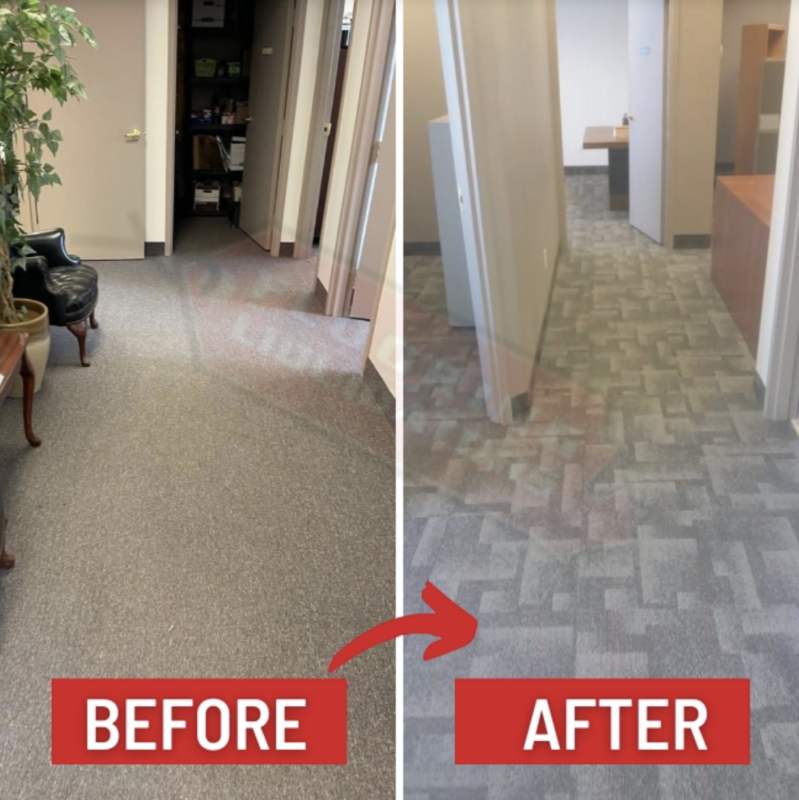
Carpet tiles have closed the aesthetic gap considerably, offering sophisticated patterns and the ability to mix colours or create custom designs and wayfinding. Up close, however, some tile installations show subtle seams or a grid, and pile direction must be planned carefully. If a flawless, unbroken field is the priority, broadloom still has the edge.
Cost comparison
| Factor | Carpet Tile | Broadloom |
|---|---|---|
| Upfront material cost | Often higher per sq. ft. | Often lower per sq. ft. |
| Installation waste | Lower (efficient on odd layouts) | Higher (offcuts from rolls) |
| Repair cost | Low (replace individual tiles) | High (patch or replace sections) |
| Downtime | Minimal, can phase | More disruptive |
| Long-term value | Strong (easy upkeep) | Good (if damage is limited) |
The headline number can mislead. Broadloom may cost less per square foot to buy, but carpet tiles frequently win on total cost of ownership once you factor in reduced waste, easy repairs, and lower downtime over the floor’s life.
Which is right for your business?
Choose carpet tiles if you have high or uneven traffic, need to minimize disruption, want easy long-term repairs, or manage a space where spills and wear are common—open-plan offices, schools, healthcare, and retail all fit well.
Choose broadloom if a seamless, upscale appearance is paramount, traffic is more moderate, and the space is a large open area without complex cuts—think executive suites, hotels, and hospitality.
Because commercial specifications vary widely, it helps to consult specialists. Flooring Liquidators’ commercial carpet range covers both formats, and their broader carpet collection can help you compare textures and performance grades.
Conclusion
There’s no universal winner in the commercial carpet tile vs. broadloom debate—only the better fit for your space. Carpet tiles offer unmatched flexibility, easy repairs, and minimal downtime, while broadloom delivers a seamless, premium look. Weigh total cost of ownership rather than sticker price, match the format to your traffic and aesthetic goals, and you’ll choose well. Visit a Flooring Liquidators showroom to compare commercial options, or reach out online—we ship Canada-wide.
Frequently Asked Questions
Are carpet tiles more expensive than broadloom? Often higher per square foot upfront, but carpet tiles can cost less over time thanks to easy repairs, less waste, and reduced downtime.
Which lasts longer, carpet tile or broadloom? Both can last many years when properly specified. Carpet tiles have an edge in high-traffic areas because worn sections can be individually replaced.
Do carpet tiles look as good as broadloom? They’ve improved dramatically, but broadloom still offers a more seamless, continuous look. Carpet tiles may show subtle seams up close.
Is broadloom or carpet tile better for an office? It depends. Open-plan and high-traffic offices often favour carpet tiles for flexibility, while executive spaces may prefer broadloom’s polished appearance.
Can damaged carpet tiles be replaced individually? Yes—that’s a key advantage. Keeping extra “attic stock” tiles lets you swap out damaged pieces for a seamless match later.